dopaminergic modulation of replay-mediated memory updating
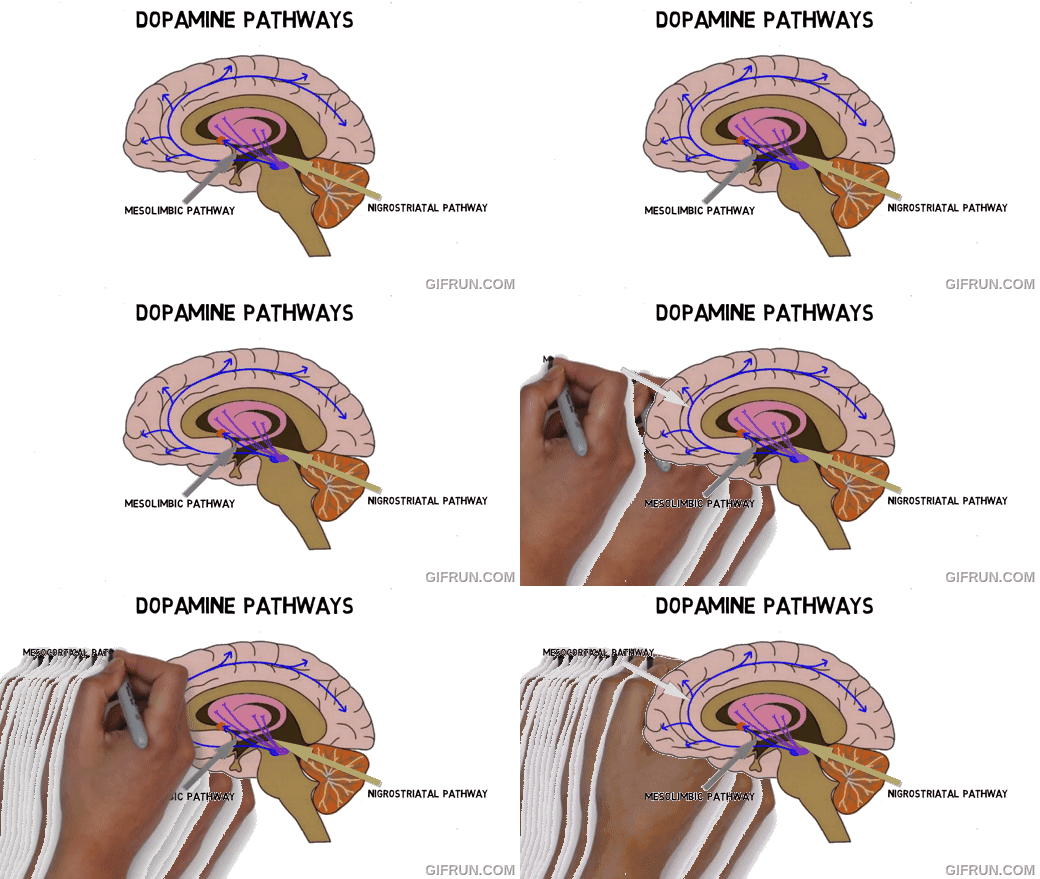
Our understanding of when and how memories update is a burgeoning area of research. Prior work has shown that partial reminders open up a window in which memories can be modified. Recent neuroimaging work has provided evidence that hippocampal univariate activity after these reminders relates to the extent to which memories are updated. We were interested in whether and how partial reminders facilitate reconsolidation by examining neural processes associated with memory consolidation. To this end, we examined post-reminder memory replay as well as functional connectivity with the dopaminergic ventral tegmental area during rest. Replay was examined locally in the hippocampus as well as across the default-mode network, separated into the medial-prefrontal network, the anterior-lateral network, and the posterior-medial network. We found that the frequency of replay events for interrupted videos was generally significantly enhanced compared to uninterrupted, or full, videos across both the hippocampus and cortical networks. Functional connectivity with the VTA modulated this effect across the cortical networks, and particularly strongly in the posterior-medial network. In this region, resting functional connectivity with the VTA significantly increased the effect of replay on memory updating specifically for the interrupted videos. That is, replay under conditions of low VTA connectivity were better stabilized and left with fewer errors, while replay under conditions of high VTA connectivity were more strongly updated and left with a greater number of errors. To further specify the nature of the errors explored here, a secondary analysis showed a very similar relationship between the proximity with which two stories were replayed and the similarity with which they were subsequently recalled, as measured by semantic embedding vectors. Specifically, that proximal replay within the posterior-medial network under conditions of low VTA connectivity led to semantic differentiation, while proximal replay under conditions of high VTA connectivity led to semantic integration. This work therefore shows, for the first time, that the role of replay in reconsolidation is dependent on dopaminergic signals, long known to signal learning events and induce learning-related plasticity across the cortex.

John Thorp, Ph.D.
Directory of Undergraduate Studies; Lecturer
John Thorp is a cognitive neuroscientist and musician interested in how information is encoded and consolidated across distributed systems.